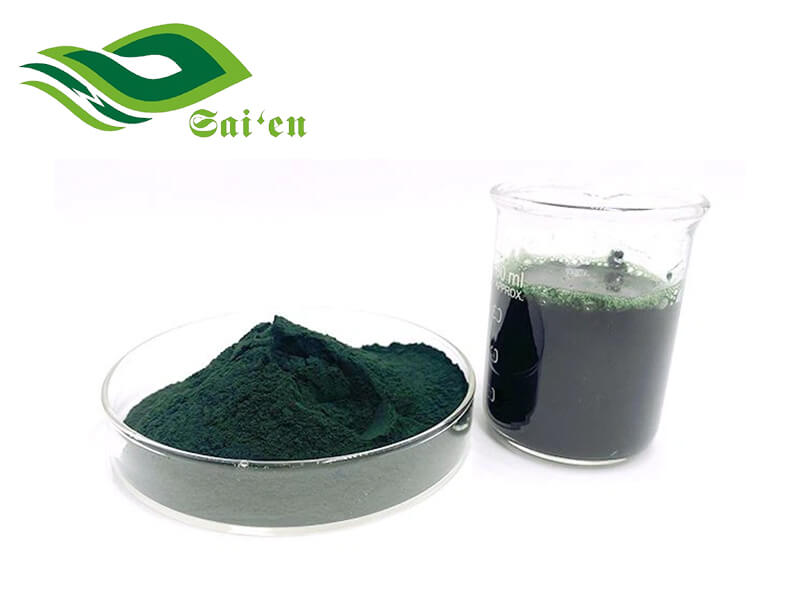
Spirulina is a microscopic aquatic plant with a spiral-shaped body and blue-green color. It is rich in nutrients such as protein, pigments, polysaccharides, vitamins, minerals, unsaturated fatty acids, etc.
Spirulina Extract has the advantages of high protein, low fat and low sugar, and is the seaweed organism with the highest protein content found so far.
It is widely used in medical research, food health, feed additives and other fields.The FDA has approved spirulina extract as a colorant for use in dietary supplements, pharmaceutical tablets, and capsules.
| Analysis Item | Specification | Results | Test Method | |||
| Physical Test | ||||||
| Appearance | Blue green Powder | Conforms | Visual | |||
| Odor /Taste | Characteristic | Conforms | Smell /Taste | |||
| Impurity | None visible impurity | Conforms | Visual | |||
| Particle size | 100% Pass 80 mesh | Conforms | Sieve | |||
| Physical and chemical index | ||||||
| Loss on Drying | ≤7.0% | 6.14% | GB5009.3-2016 | |||
| Ash content | ≤10.0% | 6.72% | GB5009.4-2016 | |||
| Protein g/100g | ≥60% | 65.82% | GB5009.5-2016 | |||
| Heavy Metals | ||||||
| Lead (Pb) | ≤0.9 | (mg/kg) | <0.40 | (mg/kg) | GB5009.12-2017 | |
| Arsenic (As) | ≤0.5 | (mg/kg) | <0.20 | (mg/kg) | GB5009.11-2014 | |
| Cadmium (Cd) | ≤0.2 | (mg/kg) | <0.04 | (mg/kg) | GB5009.15-2014 | |
| Mercury (Hg) | ≤0.05 | (mg/kg) | <0.02 | (mg/kg) | GB5009.17-2014 | |
| Microbiological Tests | ||||||
| Total Plate Count | ≤100000(CFU/g) | Conforms | GB4789.2-2016 | |||
| Yeast and Mold | ≤100(CFU/g) | Conforms | GB4789.15-2016 | |||
| Coliforms | ≤30(CFU/g) | Conforms | GB4789.3-2016 | |||
| Detection of pathogenic bacteria | ||||||
| Salmonella | Negative (/25g) | Not detected/(/25g) | GB4789.4-2016 | |||
| Staphylococcus aureus | ≤100(CFU/g) | Not detected | GB4789.10-2016 | |||
| Vibrio parahaemolyticus | ≤3.0(MPN/g) | Not detected | GB4789.10-2016 | |||
| Conclusion | Conforming to the quality standard | |||||
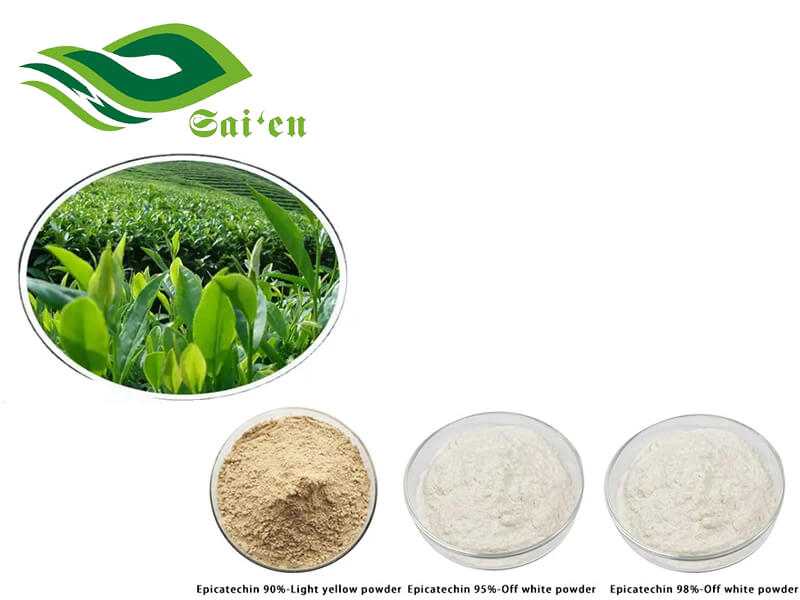
Feature Tea polyphenols (Camellia sinensis polyphenols) is the general term for phenolic compounds in tea. Catechins are the main components of tea polyphenols, accounting for…
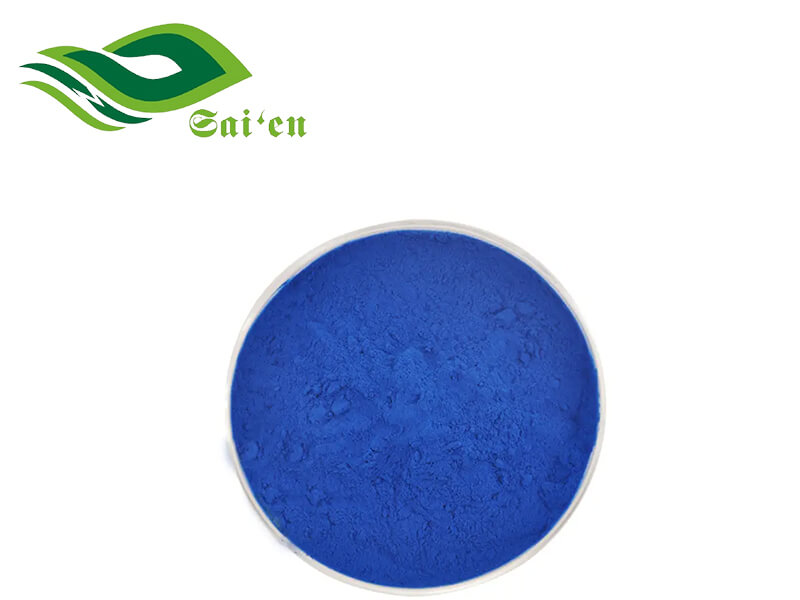
Feature In nature, cyanobacteria are the largest source of phycocyanin, and phycocyanin accounts for a large proportion of cyanobacterial cells. If under specific culture conditions,…
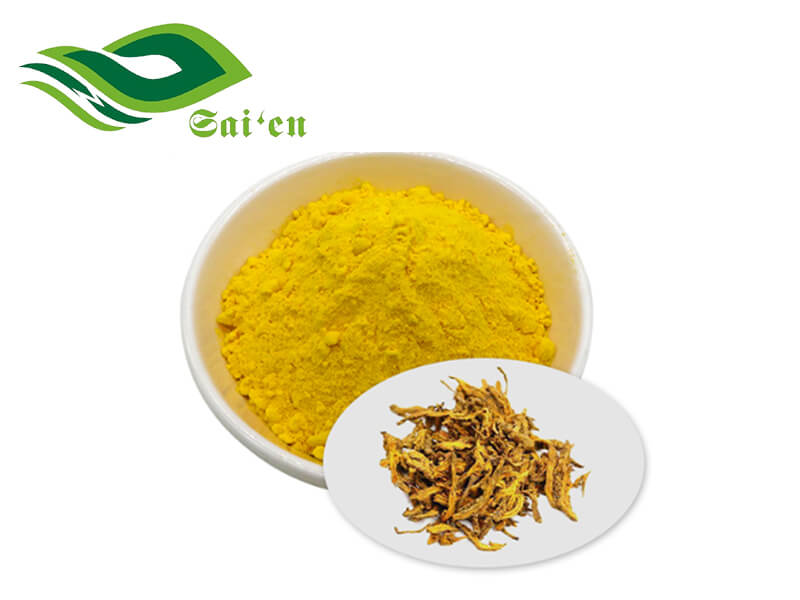
Feature Berberine is a plant-derived compound extracted from the rhizome of Coptis chinensis.Berberine hydrochloride powder is a derivative of berberine. In traditional Chinese medicine, berberine…
